BOTANY NEWS
Botanical Information
Welcome to this fifth edition of Botany News!
TOPICS:
- A note from the editor
- Plants growing in the interior of Iceland
- The worlds of beans
- The green tabloid
- Submit your own Botany News article!
- The flower box
Visit our website:
A note from the editor
Season's
Greetings! Welcome back to Botany News the new botanical online e-zine.
I hope you are enjoying still enjoying the outdoors, park visits and
garden walks, wherever you are in the world! I am still looking for
more communications from readers, telling us their own stories from the
summer! If you like
Botany News feel free to forward it to your plant-loving friends.
Some of you are already signed up and are receiving this ezine via email.
The future of Botany News depends on enthusiastic readers, willing to
exchange information on plants and events in botany. I strongly
encourage you to send in information of mutual benefit to botanists and
all suggestions for improving the ezine are welcome.
Enjoy reading Botany News during the
holiday season!
Plants growing in the
interior of
Iceland
In
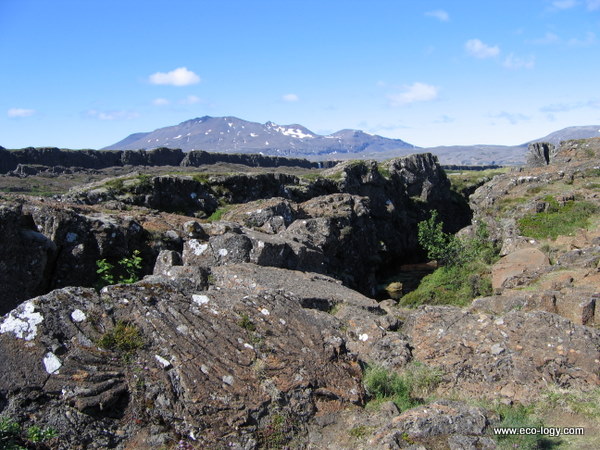
Iceland, tundra is largely
confined to the interior that has very short summers as well as
extensive sands interspersed with stretches of
wetlands along rivers.
The barrens in the
central highlands of Iceland have very sparse vegetation. The species
growing there are well adapted to the short summer. The plants need to
tolerate drifting sand and extreme soil conditions. Some of the species
form dense cushions. Among them are Moss Campion (Silene acaulis) and
Tufted Saxifrage (Saxifraga caespitosa), while Thrift (Armeria maritima)
forms a smaller rosette. Moss Campion forms a dense cushion with small
but fragrant pink flowers. When the flowers are absent the bright green
leaves in the cushion are more pronounced. Tufted Saxifrage carries
white flowers. This species is widespread in Iceland. Thrift carries a
rosette of fleshy leaves.
Grasses, rushes and sedges grow as stoloniferous or tussock-forming
species on the tundra sand. These species depend on vegetative growth
for many years but also reproduce sexually. Facilitation may occur when
aggregations of some species, for example, Moss Campion, form cushions
that provide shelter or otherwise suitable conditions for the
establishment of other plant species. Plants of the barrens growing as
perennial rosettes, cushions and tussocks may reproduce by seed and
disperse into new sites in the vast sands of the interior.
The world of beans
Broad
Bean (Vicia faba), is confined mostly to tropical regions of the world,
while requiring a cool season for its development. This plant is grown
as a winter annual in the warm temperate and subtropical regions and is
cultivated for its seeds that are consumed either immature or mature.
The beans are marketed in their green pods. Broad Beans are very popular
in Europe, including the Mediterranean and in many tropical countries.
French Bean (Phaseolus vulgaris) is a
twinning plant believed to be derived from
Central America and Mexico. These beans were brought to Europe by
the Spanish and Portuguese. The beans tolerate a wide range of
conditions in tropical and temperate countries, but do poorly in the
very wet tropics where rain causes disease and flower drop. These
plants are sensitive to diurnal fluctuations, folding their leaves
together at night, while at dawn the leaves unfold towards the sun.
Some cultivars yield yellow pods, but pods are more commonly green.
Snap Beans are a cultivar of French
Beans used as entire pods, other cultivars are eaten as immature green
seeds, while the third group consists of dry beans. Lima Beans (Phaseolus
lunatus) are
climbing perennial plants. They grow over adjacent vegetation in the
wet season and then die back in the dry season.
The seeds are large and
variable in colour. These beans are now cultivated in South America,
Asia and Africa. They are now a very important crop plant in Africa.
White Lima Beans contain smaller amounts of cyanogens and need less
cooking. Mung Bean (Phaeseolus aureus) is an annual plant and is
commonly grown in Asia, especially China, while also being a popular
food plant in western countries. Sprouts are popular in salads and
stir-fries.
Soybean (Glycine max) is
a source of edible oil and is now cultivate on a large scale in the
United States. In Indonesia fermented soybeans are consumed as tempe,
and as tofu in China and Japan. Soy sauce is a Soybean product.
Soybeans are very popular nowadays, partly because they are very rich in
protein.
Most beans are nutritive and rich in
proteins, they are a good source of B vitamins, mineral and fibre. Beans
are best cooked in plenty of water and often require soaking before
being cooked.
The Green Tabloid
Water,
soil and Earth's green biosphere are the support system for animal life
on planet Earth. Plants are a part of the continuum of life, where the
important interactions of plants and animals occur. While both
herbicides and pesticides have been with us for decades, and provide us
humans with partial control over nature, the use of these compounds must
constantly be reconsidered to improve methods for reducing their harmful
effects to living beings in ecological food chains. Our garden hedges
are homes for pollinating butterflies, beetles, bees and dipteran flies.
Many of these insects are necessary for our cultivation efforts and the
destruction of their homes remains questionable. Similarly, herbicides
may destroy fertile soils, and as much as we would like to clear our
gardens of weeds, the weeds are an indication of a healthy, organic
garden. Herbicides
and pesticides often end up in undesirable places in nature. Many toxic
chemicals also have a way of persisting in the environment, both in food
and water supplies for wildlife and humans.
A toxic
chemical, an insecticide or herbicide, may be sprayed or dusted onto
crop plants. The chemical may enter the soil or remain on the plant's
leaves until rain or irrigation washes the chemical further into ground-water,
rivers and oceans. While high concentrations of toxic chemicals seldom
accumulate in the hydrological systems, many compounds are found in
higher concentration in fish and waterfowl as well as human beings. All
in all, caution is needed in the use of pesticides and herbicides, while
exploring alternative ways of keeping our garden and crop plants healthy.
Submit your own Botany News
article!
You
can write on any topic related to botany. Short essays on plant biology
are especially popular. It can also be a review of recent botanical
developments. Anything that will help your fellow botanists and make it
possible for them progress in their work!
The articles need be approximately 300-1000 words. If needed or requested editing will be made of English and style. The editor may request some changes and articles that do not fit the profile or purpose of Botany News are not published. Your article is still yours and you keep the full copyright. Submit your Botany News article!
The flower box
The Iceland
Touring Association was founded in the early 20th century and its goal is to
promote travel in Iceland. All are welcome to join the society and members
enjoy privileges when it comes to accommodation in huts and trips offered by the
society. If you feel like visiting Iceland during the summer you could also
sign up for Customized Botanical Tours in Iceland. Please, remember to fill in
the Expression of Interest Form as this will greatly help us to make your visit
better. The spring, summer, and autumn are good times to explore the nature of
Iceland. Updated information about the tours will be published in this section.
If you wish to participate and are planning a trip to Iceland contact us well
in advance.
For vegetarians visiting Iceland there are several options. You could visit some of the downtown Reykjavik vegetarian restaurants or check the world's most northerly Indian restaurant, AusturIndíafélagið! Alternatively, visit the harbour town of Hafnarfjörður and try Von a cozy restaurant serving some nice dishes.
However, if would like to leave the Reykjavik city consider staying on farms and enjoying the tranquil countryside. This section publishes brief announcements about botany and related issues. Announcements about meetings, excursions, courses, jobs and other important items are consider for publication here. Announcements are generally less than 300 words. Readers located in Iceland are encouraged to check out Thund’s sales page for new botanical health products. Submit your Botany News announcement!
--------------------------------------------------------------------------------
Best wishes, Soffia Arnthorsdottir
BOTANY NEWS is published by Thund, Reykjavik, Iceland
November 25, 2005 -- Botany News, Issue #005

Skráðu þig til að fá Gróðurfréttir! - Sign up to receive Botany News!




Safetravel - Be safe in Iceland



Recent Articles


-
Gróðurferðir
Apr 05, 24 06:46 AM
 Sérsniðnar ferðir sem vísa þér leið um innlend gróðurlendi um leið og þú nýtur náttúru og fegurðar landsins.
 -
Botanical Tours
Apr 05, 24 06:19 AM
 Customized tours guiding you through the native vegetation of Iceland, enjoying the nature and beauty of Iceland.
 -
Professional translation
Nov 08, 23 10:30 AM
 Professional translation